Total War: Medieval 3 vs. Medieval 2 – The Wishlist for a Modern King
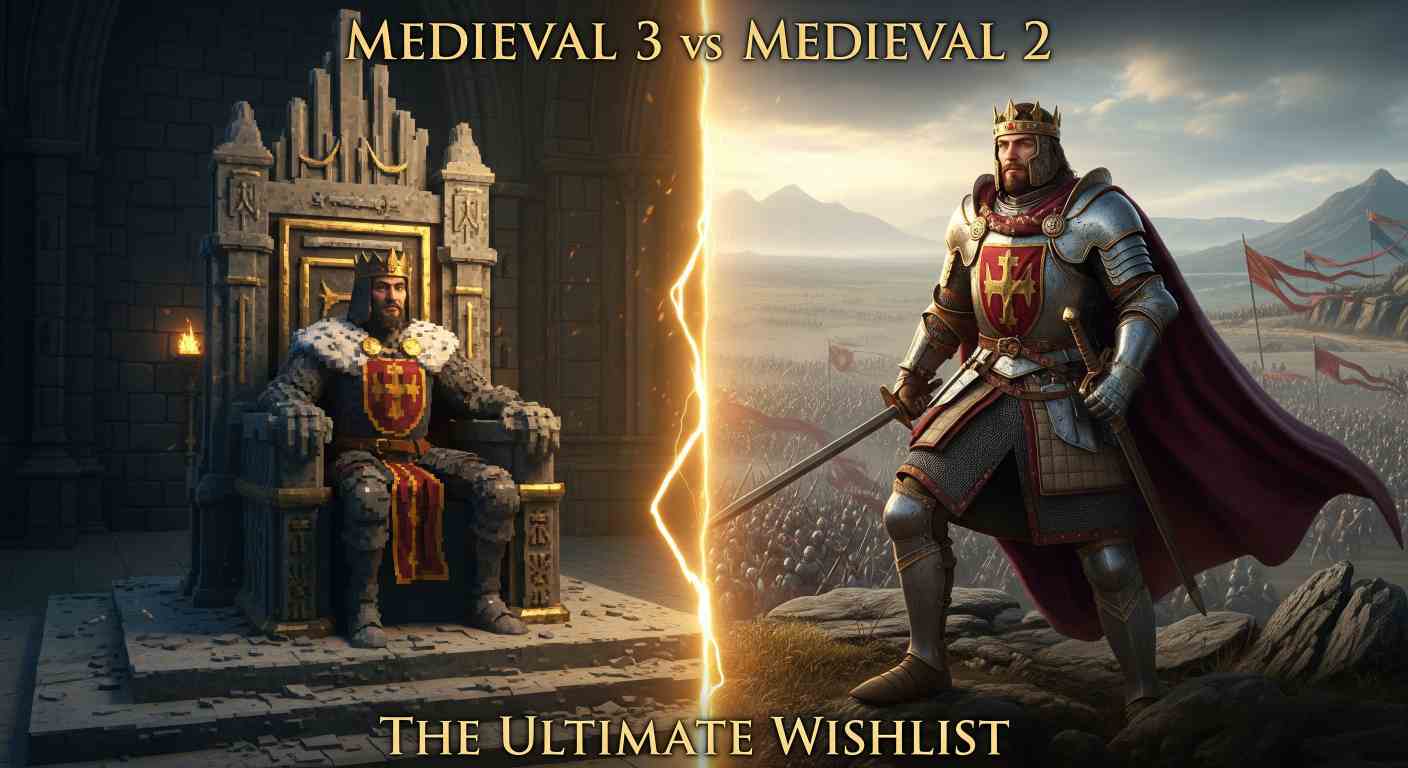
The Unshakable Legacy of a King: Medieval II
To understand what Medieval 3 must aspire to, we must first pay homage to what made its predecessor legendary. Released in 2006, Medieval II wasn’t just a game; it was a sprawling, chaotic, and deeply immersive medieval sandbox that has refused to fade into history.
Medieval II’s battles, though dated, created a sense of scale and tactics that remains unmatched for many players.
Its strengths are the stuff of forum legend:
- The Pinnacle of “Old School” Campaigns: It offered a staggering strategic layer where you managed individual family members (with traits like Chivalry and Dread), built every structure in a city without restrictive slots, and defended settlements with flexible garrison armies you created yourself—features fans feel were lost in later titles .
- Atmospheric & Deadly Battles: While graphically primitive, the battles were praised for their weighty, tactical pacing. Units moved and fought with a sense of mass, where fatigue, formation, and flanking attacks were brutally decisive . As one veteran put it, the game succeeded in abstracting non-essential elements to keep the focus on the core thrill of commanding armies .
- A Modding Colossus: The true secret to its longevity. Medieval II’s accessible architecture gave birth to iconic total conversion mods like Third Age: Total War (Lord of the Rings) and Stainless Steel, effectively creating dozens of new games within its engine and fostering a massively dedicated community .
However, to crown a new king, we must also acknowledge the old one’s frailties. The battle and campaign AI could be exploitable . The graphics, while charming, are from another era. The user interface lacks the polish and clarity of modern strategy games. This is the foundation upon which Medieval 3 must build.
The Promise of the Heir: What We Know About Medieval 3
The official announcement, while light on concrete details, paints a picture of bold ambition . Creative Assembly is not just making a sequel; they are building what they call the “ultimate medieval strategy sandbox” on a new, powerful engine named Warcore .
“Combining meticulous historical authenticity with unprecedented player agency, this is more than a sequel, it’s the rebirth of historical Total War.” – Creative Assembly
Key hints suggest a focus on dynamic realms, deep character roles (hinting your kingdom could be “like the main character in an RPG”), and more authentic medieval systems like raising armies through “oaths of fealty” rather than instant recruitment . The scope will span the 12th to 15th centuries, featuring legendary figures from Saladin to Richard the Lionheart . Most importantly, the developers have announced it early to gather fan feedback—making this wishlist part of the very process .
The Royal Decree: The Modern King’s Wishlist
Bridging the gap between cherished legacy and cutting-edge potential, here is the community’s consolidated decree for Creative Assembly.
| Feature | Medieval II’s Legacy | The Medieval 3 Wishlist |
|---|---|---|
| Campaign Depth | Deep family trees, trait-based characters, unlimited city building, flexible garrisons . A strategic layer that felt like governing a dynasty. | EVOLVE & ENHANCE: Keep and expand the dynasty management. Integrate a Crusader Kings-lite layer of intrigue, vassal loyalties, and succession crises. Bring back meaningful, player-built garrisons. |
| Battle Realism & AI | Paced, weighty combat where fatigue and morale were key . However, AI could be simplistic and exploitable. | REVOLUTIONIZE: Use the Warcore engine for stunning visuals AND smarter, more adaptive AI that doesn’t need cheats. Keep tactical depth but improve unit responsiveness and battlefield physics. |
| Siege Warfare | Iconic, multi-layered castle assaults, but with often-broken pathfinding. | REINVENT: Truly dynamic siege maps that reflect campaign map development. Functional, challenging AI for both attack and defense. Destructible environments done right. |
| Modding Support | Unparalleled access that created a 19-year legacy . The lifeblood of the game. | NON-NEGOTIABLE: Medieval 3 must launch with official, robust modding tools. This is the single biggest factor for long-term success. |
| Diplomacy & Politics | Functional but basic. The Papacy system was a standout unique feature. | EXPAND GREATLY: A system as deep as the warfare. Dynamic alliances, religious schisms, trade leagues, and meaningful councilors that can betray you. |
Conclusion: Long Live the King (If He Listens)
The announcement of Total War: Medieval 3 is a moment of great hope and slight trepidation. The community’s love for Medieval II isn’t just nostalgia; it’s a testament to a specific design philosophy—one of depth, player agency, and moddable chaos that some feel has been streamlined out of later entries .
The path forward for Creative Assembly is clear: Harness the unmatched power of modern technology like the Warcore engine not just for prettier visuals, but to fulfill the unrealized potential of the medieval fantasy that Medieval II first captured . They must build a game that feels both reassuringly familiar to the old guard and breathtakingly new to all.
The throne is prepared. The crown is forged. Whether Total War: Medieval 3 earns its place as the true successor to a legend depends entirely on whether its creators listen to the wishes of their kingdom—the players who have kept the flame burning for nearly two decades.
What is your #1 wish for Total War: Medieval 3? Join the discussion and let your voice be heard as development begins.
Leave a Reply