The 5 Kingdoms That Must Be in Total War: Medieval 3
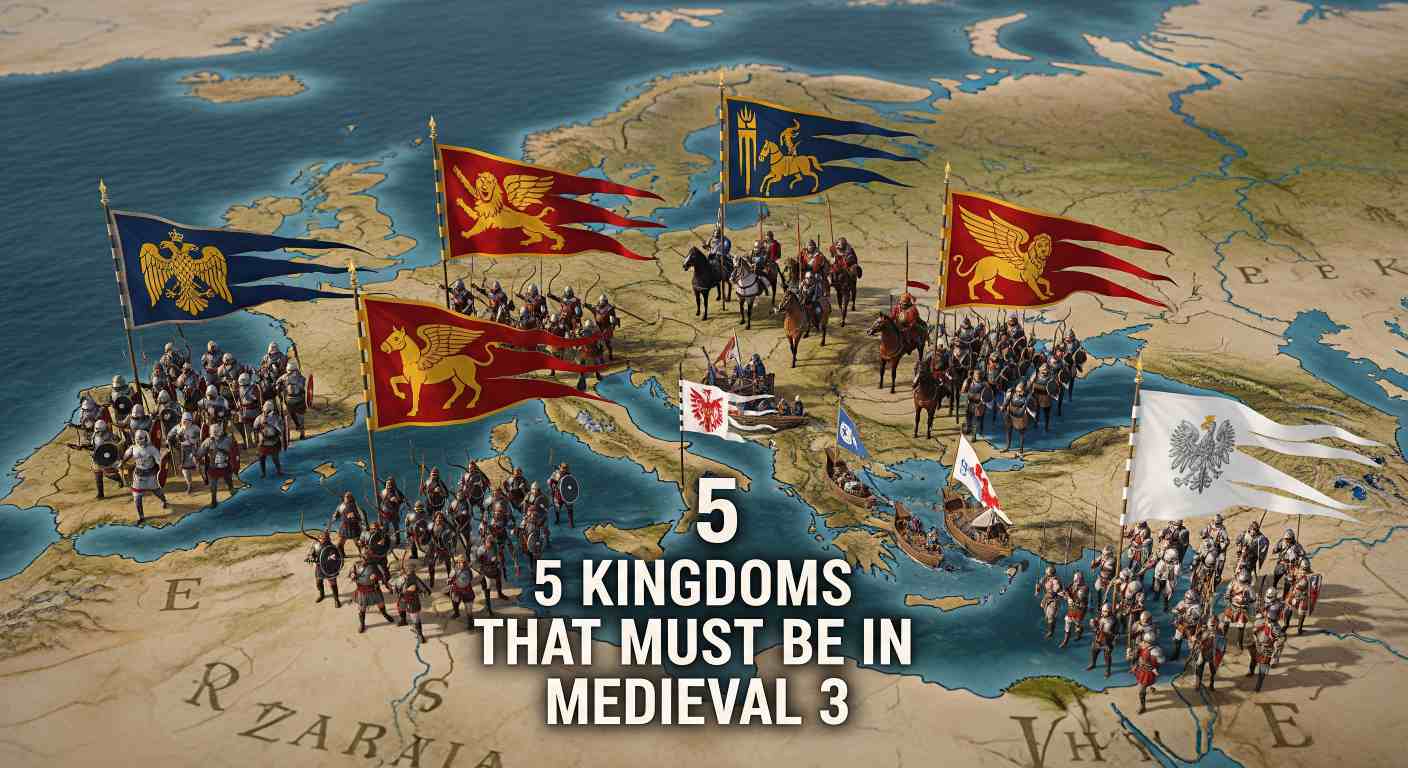
Total War: Medieval 3 is finally a reality, officially announced and in its “early pre-production” phase . In a groundbreaking move, Creative Assembly has revealed the project years in advance to actively gather feedback from its passionate community, declaring it the planned “rebirth of historical Total War” . With the game’s scope set to span the tumultuous 12th to 15th centuries, the question on every fan’s mind is: which kingdoms will we get to lead?
The Essential Factions for a Living World
An authentic medieval map wasn’t just dominated by unified nation-states. It was a patchwork of empires, emergent kingdoms, merchant republics, and nomadic khanates, all interacting in a complex dance of war, faith, and politics . The following table outlines the five factions that could best bring this dynamism to life.
| Faction | Historical Core & Period | Proposed Unique Gameplay Angle |
|---|---|---|
| The Byzantine Empire | Anatolia & Balkans (12th-15th C.) | The crumbling superpower; defend a shrinking empire with superior technology and diplomacy. |
| The Mongol Empire | Steppes of Asia (13th-14th C.) | The ultimate late-game crisis; a tsunami of fast, lethal cavalry that reshapes the political map. |
| The Republic of Venice | Northern Italy & the Mediterranean | Naval and economic dominance; win through trade, intrigue, and controlling sea lanes. |
| The Sultanate of the Turks (Seljuk/Ottoman) | Anatolia & Near East | A faction in metamorphosis; evolve from a Seljuk sultanate into the gunpowder-powered Ottoman Empire. |
| The Kingdom of Poland | Eastern Europe | The eastern bulwark; a melting pot of Western chivalry and Eastern steppe tactics, facing threats from all sides. |
1. The Byzantine Empire: A Realm on the Razor’s Edge
The Last Roman Legacy
No medieval setting is complete without the Byzantine Empire, the千年-old continuation of Rome. By the 12th century, it was a shadow of its former self but remained a bastion of immense wealth, advanced culture, and profound strategic importance, controlling the crucial crossroads between Europe and Asia .
2. The Mongol Empire: The Storm from the East
History’s Ultimate Mid-Game Crisis
The Mongol invasions of the 13th century were the defining cataclysm of the High Middle Ages, toppling empires and redrawing the map from China to Hungary. Their inclusion is non-negotiable for historical authenticity and epic gameplay .
3. The Republic of Venice: Gold is Power
The Serene Dominance of Commerce
The Italian maritime republics, with Venice at their head, represented a completely different model of power: the merchant state. Their wealth, built on controlling trade between Europe and the Levant, rivaled that of kingdoms and was wielded with ruthless efficiency .
4. The Sultanate of the Turks: From Seljuks to Ottomans
A Dynasty in Transformation
The medieval period in Anatolia and the Near East witnessed the dramatic rise of Turkish power, from the Seljuk Sultanate that crushed the Byzantines at Manzikert to the Ottoman beylik that would grow into an empire . This fluidity offers a perfect canvas for dynamic faction design.
5. The Kingdom of Poland: The Shield of Christendom
The Eastern Frontier’s Forge
Medieval Poland was a realm perpetually at the intersection of worlds: Latin Christendom, the Orthodox East, and the pagan Baltic and steppe nomadic peoples to its north and east. This position made it a constant battlefield and a cultural melting pot .
Building a Legacy Worthy of the Name
The announcement of Medieval 3 is a dream realized for historical strategy fans, and the developer’s unprecedented call for early community input is a golden opportunity . By moving beyond a checklist of Western European powers and embracing the full, chaotic diversity of the medieval world—from the merchant princes of Venice to the horse lords of the steppe—Creative Assembly can build a sandbox of unparalleled depth and replayability.
The promise of the new Warcore engine to bring the era to life “in ways we’ve previously never been able to achieve” should extend beyond graphics to the very fabric of its political simulation . Here’s hoping the final map is one where every campaign tells a different story, shaped by these essential and iconic kingdoms.


Leave a Reply